Reaching carbon neutrality by 2050 also means squeezing the emissions out of the infrastructure we already have. Congestion itself is a carbon problem: a vehicle stuck in stop-and-go traffic burns far more fuel per kilometre than one moving at a steady pace. This is the specific problem the MATIS consortium’s ITS deployments are built to attack. Across MATIS 1 alone, the programme targets a 3% reduction in CO₂ emissions at major bottlenecks — a modest-sounding percentage that, multiplied across an entire TEN-T corridor, represents a substantial volume of avoided emissions.
Smoothing the flow to avoid stop-and-go emissions
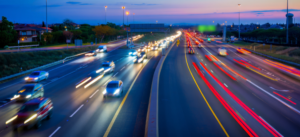
The clearest emissions lever is preventing traffic from bunching up in the first place. On the Rennes ring road, DIRO’s ramp-metering system holds vehicles at the access slip roads for up to a minute, so the ring road itself never tips into gridlock. Each vehicle that doesn’t sit in a queue is a vehicle that isn’t idling and re-accelerating; the first deployment already delivered significant queuing time avoided per day across morning and evening peaks, a direct proxy for fuel and emissions saved, with four further access points now feeding into the same logic.
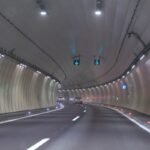
A share of a motorway’s emissions also comes from the jams that build up behind an accident or a false alert. This is where MATIS’s incident-detection work has a direct decarbonisation payoff. On Catalonia’s C-32, AUCAT’s tunnel-management upgrade goes further, cutting incident-related queues by more than 50% and freeing over 10,000 vehicle-hours a year that would otherwise have been spent stationary rather than moving.
The energy backbone behind a lower-carbon road
Decarbonising the network also depends on infrastructure most drivers never see. On the A4 Brescia–Verona–Vicenza–Padova corridor, a new SCADA system gives operators real-time remote monitoring of the power supply feeding tunnels and roadside equipment, catching faults before they cause an outage that would otherwise disrupt traffic flow — and with it, generate the very stop-and-go emissions the rest of MATIS is designed to eliminate.
Taken together, these projects make the same point from different angles: cutting road transport emissions is not only a question of which vehicles are on the road, but of how well the road itself manages the flow, the incidents and the conditions that push a smooth journey into a stationary, fuel-burning one.